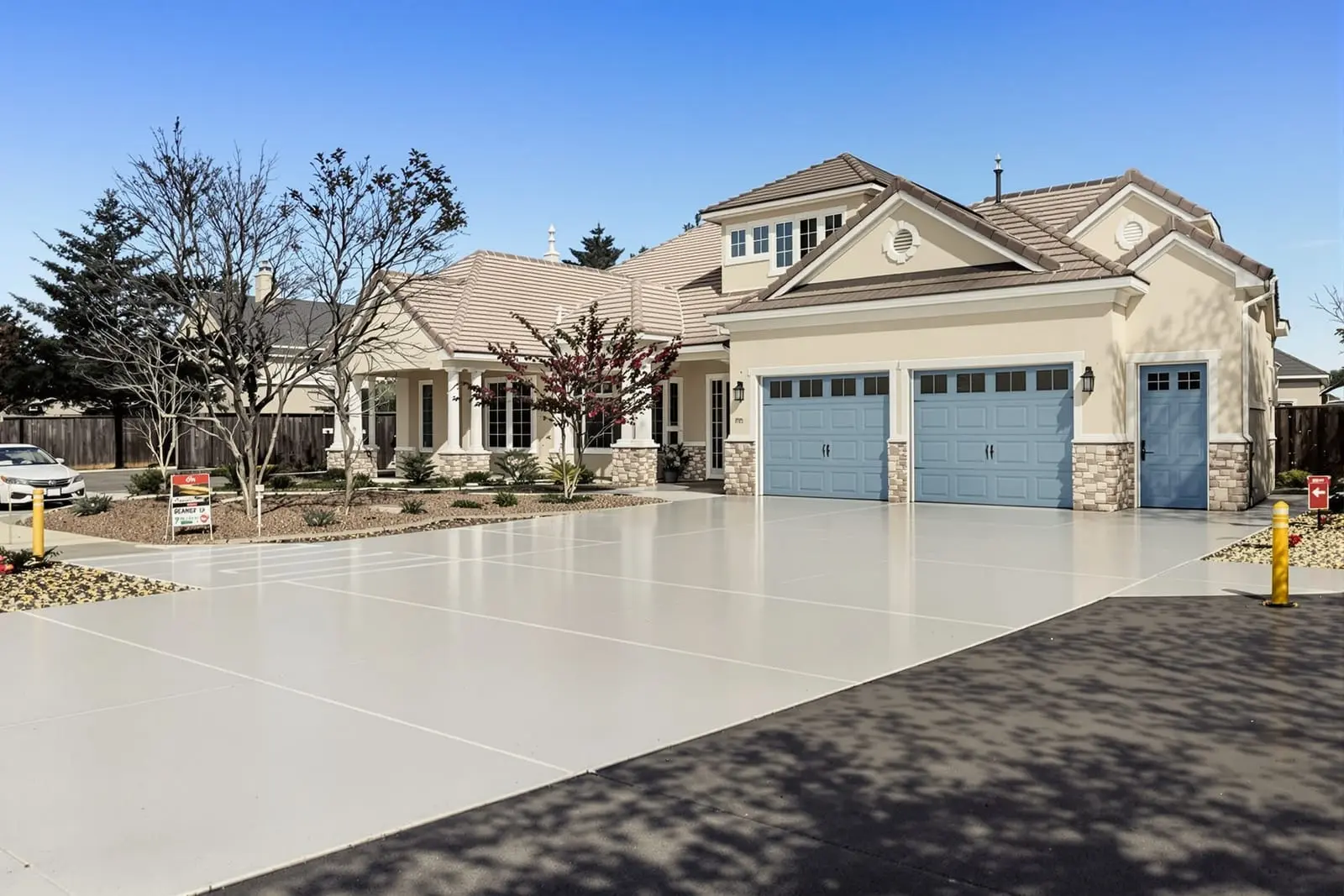
We provide commercial concrete paving in Augusta, GA for shopping centers, offices, restaurants, and multi-family properties. Our team pours durable concrete for drives, loading areas, dumpster pads, and more, sized for commercial traffic. We coordinate schedules and phasing to keep your business accessible while work is completed.
Vanguard Concrete Augusta provides professional commercial concrete paving throughout Augusta, GA and the surrounding area. Our licensed, insured crew delivers safe, clean, on-time work with a free estimate before anything begins. Call (762) 320-5837 or request your free quote.
Commercial Concrete Paving for Augusta Businesses
Vanguard Concrete Augusta provides commercial concrete paving tailored to the way Augusta properties are actually used, from busy distribution yards near I-20 to medical office parking lots along Washington Road. Our focus is on putting in pavements that carry real traffic loads, meet local code, and stay serviceable in our hot, humid climate.
When we plan a commercial concrete paving project, we start by understanding how your surface will be used. A restaurant parking lot that turns over cars all day needs different thickness and joint spacing than an industrial loading dock that sees slow but heavy axle loads. We look at your traffic patterns, turning areas, delivery truck routes, and drainage pathways before we ever talk mix design or square footage.
Because we work almost exclusively in the Augusta area, we know how local clay soils behave, how summer heat affects curing, and what CSRA municipalities are actually enforcing in terms of pavement design and accessibility. That local experience lets us recommend concrete pavement structures that are realistic for your budget but still tough enough for Augusta conditions.
How Our Commercial Concrete Paving Process Works
A successful commercial concrete paving job comes from controlling each step, not just pour day. Vanguard Concrete Augusta follows a defined process so your lot or yard ends up flat, well drained, and ready for business.
Site evaluation and layout: We walk the site with you, verify property lines, measure slopes, locate utilities, and flag problem areas like soft spots or existing drainage failures. For new construction, we coordinate with your civil plans. For rehab work, we determine what can stay and what has to be removed.
Removal and subgrade prep: Existing asphalt or failed concrete is sawcut where needed and removed. We proof-roll the exposed subgrade with equipment to find soft or pumping areas. Weak soils common in parts of Augusta are undercut and replaced with compacted base stone or stabilized soil so the pavement does not settle or heave.
Base installation: We typically install and compact a graded aggregate base. Thickness depends on traffic load and soil conditions. We pay close attention to cross-slope so finished concrete sheds water instead of ponding, which is a main cause of long-term surface damage.
Forming and reinforcement: Forms or paving guides are set to precise elevations. We install dowel baskets at construction joints where needed, and either rebar or welded wire reinforcement where specified. On wide bays or where heavy truck traffic is expected, we adjust joint spacing and reinforcement to reduce future cracking.
Concrete placement and finishing: We place concrete using chutes, buggies, or pump trucks depending on access. Surfaces are struck off, bull-floated, and given a broom finish for traction. Edges are tooled for durability, and expansion joints are placed near fixed structures like buildings and drains.
Curing and joint cutting: After finishing, we apply curing compound or use wet curing methods to slow evaporation in our summer heat. Joints are sawcut at the right time, early enough to control cracking but late enough that the surface will not ravel. For large areas, we schedule cuts through the evening if needed so random cracks are minimized.
Material Options and Pavement Design Choices
Commercial concrete paving is not one-size-fits-all. Vanguard Concrete Augusta walks you through specific design choices so the pavement fits your use and life-cycle expectations.
Concrete strength and mix: For light duty parking with passenger vehicles only, a standard 4,000 psi mix might be appropriate. For heavy truck lanes, dumpster pads, or loading docks, we typically specify 5,000 psi or higher and adjust aggregate size and admixtures to handle heat and reduce shrinkage. Fibers can be added to control micro-cracking in some applications.
Thickness and joint layout: Thickness is the single biggest structural variable. A typical retail parking area may be 5 to 6 inches, while heavy truck lanes and dock aprons can range from 7 to 10 inches or more. We also design joint spacing based on slab size, thickness, and expected temperature swings, and we plan panel sizes to avoid odd-shaped sections that usually crack.
Surface texture and slope: For parking lots and walkways, a medium broom finish balances slip resistance and cleanability. For loading areas or ramps, we may tighten the broom for extra traction. Slope is usually set between 1 and 2 percent. Too flat and you get persistent puddles, too steep and vehicles and pedestrians are uncomfortable. We fine-tune slopes around entrances and ADA paths to meet accessibility requirements.
Color, hardeners, and sealers: Most commercial pavements in Augusta are natural gray, but we can use colored concrete or integral hardeners for branding or traffic delineation. Penetrating sealers may be recommended in areas with frequent chemical exposure or where you want to make oil staining easier to clean, like in automotive service drives.
Cost Factors Specific to Commercial Concrete Paving
Vanguard Concrete Augusta is upfront about what actually drives the cost of commercial concrete paving so you can make informed decisions and compare bids fairly.
Pavement thickness and strength: Every additional inch of thickness significantly increases material and labor. A 7 inch truck lane will cost more per square foot than a 5 inch car-only area. Similarly, higher strength mixes cost more but may allow for reduced thickness in certain engineered designs.
Site conditions and access: Poor soils that require undercutting and base replacement will add cost, but skipping this step often leads to early failure. Limited access that forces us to use buggies or pump trucks instead of direct chute placement will also increase labor and equipment needs.
Phasing and downtime: Working around an operating business often means night or weekend work, segmented pours, and more traffic control. These constraints protect your operations, but they do add cost. We can show you how small scheduling changes might reduce overall pricing without disrupting your tenants or customers.
Drainage and details: Additional catch basins, trench drains, thickened edge sections, and dumpster pads all add structural value and cost. However, putting these in during your paving project is usually cheaper than retrofitting them later when problems show up.
Permits and compliance: In certain Augusta and Richmond County jurisdictions, stormwater and accessibility requirements influence design. We factor these into our proposal so there are fewer surprises later in the process.
Common Commercial Pavement Problems We Solve
Many of our projects at Vanguard Concrete Augusta involve fixing issues created by earlier paving work or designs that did not match the actual site conditions.
Premature cracking: Random or wide cracks usually come from poor joint layout, rushed curing, or inadequate base preparation. When we evaluate a failing lot, we look at the pattern of cracks to identify root causes. Repairs might involve partial-depth patching, full-depth panel replacement, or in extreme cases complete reconstruction with corrected joint spacing and base.
Ponding and poor drainage: Flat spots that hold water are common on older lots. Standing water accelerates surface wear and becomes a safety issue in winter freezes. We use laser levels to identify low areas, then correct them with localized slab replacements, overlays, or regrading during a full repave.
Edge failures and broken panels: Dumpster pads, drive-through corners, and truck turning areas often break first because they were not designed for the loads they see. We replace these with thicker, reinforced concrete tied into the surrounding pavement using dowels so the patch acts as part of the whole slab, not an isolated island.
Surface wear and staining: In high use areas like fueling stations, car washes, or loading docks, surface paste can erode or stain heavily. Depending on severity, solutions range from power cleaning and sealing to thin bonded overlays or full-depth replacements for structurally compromised slabs.
Why Local Expertise Matters in Augusta, GA
Commercial concrete paving in Augusta has its own set of challenges tied to climate, soil, and traffic. Vanguard Concrete Augusta has tuned its methods to the CSRA environment so your investment holds up.
Climate and curing: Our long, hot summers speed up set times. If concrete is not properly cured, surface strength suffers and shrinkage cracking increases. We use mix designs, placement timing, and curing practices that account for Augusta heat and humidity, like starting earlier in the morning and adjusting admixtures during peak summer.
Soil and groundwater: Many properties in and around Augusta, including areas near the river and older industrial sites, sit on variable clay soils. These can hold water and pump under repeated truck loads. We design base and subgrade treatments to limit movement instead of just making the slab thicker and hoping for the best.
Local codes and expectations: Augusta, Richmond County, and neighboring jurisdictions have differing standards for parking counts, accessibility, and stormwater. We are familiar with the plan reviewers and common comments, which helps your project move more smoothly from design through inspection.
Regional traffic patterns: Access routes for delivery trucks, school traffic, and peak commuting times around major corridors like Wrightsboro Road affect how we phase pours and schedule work. That local knowledge keeps your operations more predictable while work is underway.
Planning Your Commercial Concrete Paving Project
Effective planning keeps your project on schedule and your property functional while work is underway. Vanguard Concrete Augusta works with owners, facility managers, and general contractors to align paving work with real-world constraints.
Usage analysis: We start by clarifying where cars, trucks, emergency vehicles, and pedestrians move and park. This informs which areas get heavier concrete sections, where we need tighter joint spacing, and how to route temporary traffic during construction.
Phased construction: For active shopping centers, medical offices, and industrial facilities, we often pave in sections so some parking or loading capacity is always available. We map phasing plans in advance, coordinate with your tenants, and can schedule pour times that reduce conflict with peak customer or truck hours.
Integration with other trades: On new builds or major renovations, timing concrete paving with utilities, landscaping, and building work is critical. We coordinate elevations with entry doors, dock heights, and drainage tie-ins so there are no surprises late in the project.
Long-term maintenance planning: Before we finish, we discuss realistic maintenance expectations for your new concrete pavement, such as when to consider sealing, how to manage joint cleaning, and what loads to avoid in early weeks. This helps you protect the pavement through its most vulnerable period and extend its service life.
“
Professional commercial concrete paving, done right the first time, quality materials, honest pricing, and results that last.
Vanguard Concrete Augusta
Commercial Concrete Paving Across Our Service Area