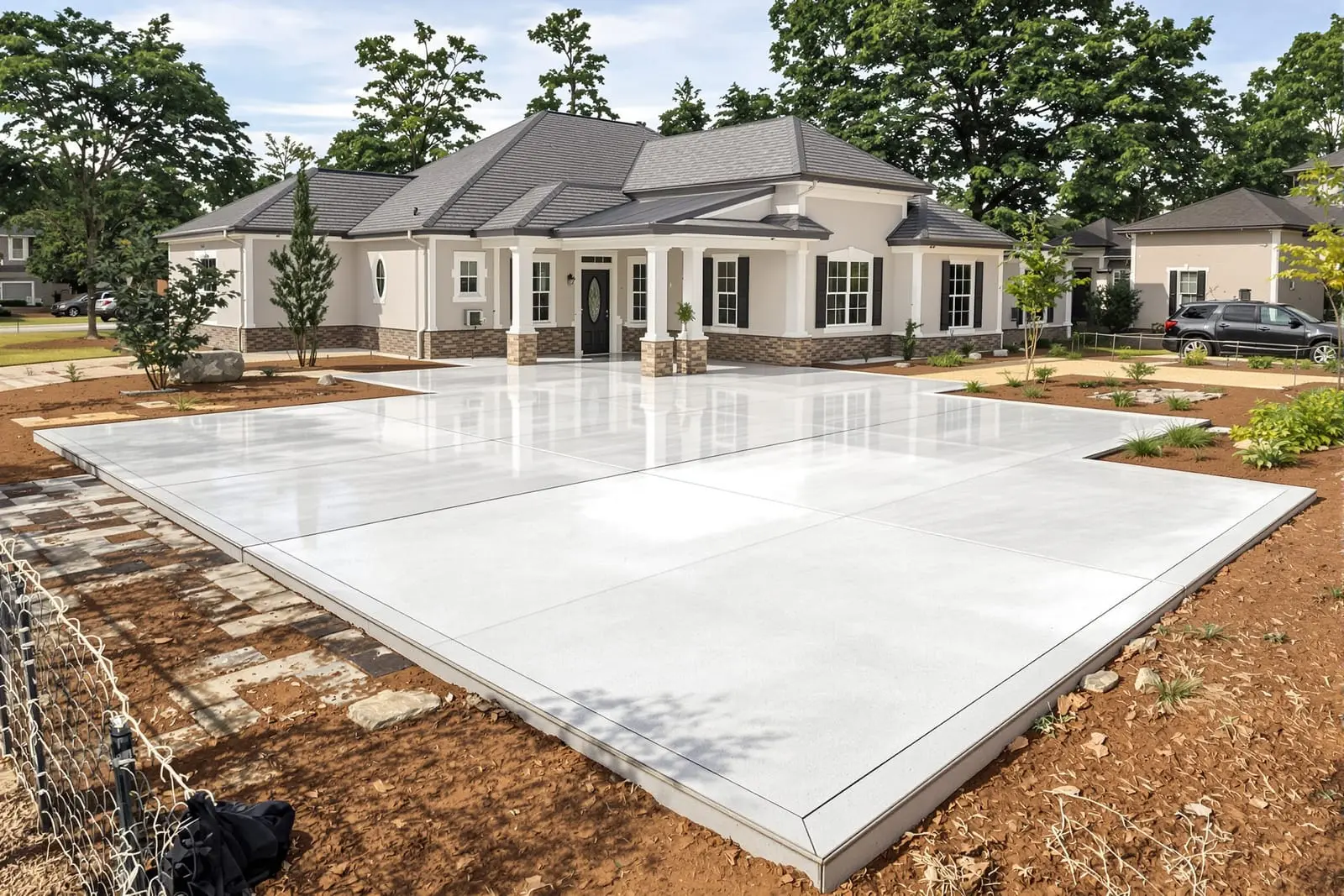
We perform sitework and structural concrete in Augusta, GA for commercial and light industrial projects. Our capabilities include grade beams, retaining structures, equipment foundations, and elevated slabs built to engineered specifications. Coordinated scheduling, experienced crews, and quality control help keep your project on track.
Vanguard Concrete Augusta provides professional structural concrete throughout Augusta, GA and the surrounding area. Our licensed, insured crew delivers safe, clean, on-time work with a free estimate before anything begins. Call (762) 320-5837 or request your free quote.
Sitework & Structural Concrete for Augusta Properties
Sitework and structural concrete are the parts of your project that everything else depends on. If the dirt work, footings, and slab are not right, you will fight problems for the life of the building. At Vanguard Concrete Augusta, we focus on getting these early stages correct for Augusta soil and weather conditions so the structure on top stays solid.
In practical terms, sitework covers clearing, grading, drainage planning, and preparing the subgrade. Structural concrete covers the elements that carry loads: footings, foundations, piers, walls, columns, and structural slabs. For commercial projects in Augusta that usually means building pads, turn lanes, dumpster pads, loading docks, machine pads, and thickened edge slabs. For residential, it often means foundations, driveways that will carry heavier vehicles, and garage slabs.
Because we are local to Augusta, we are familiar with the mix of clay, sand, and occasional fill dirt you get from neighborhoods off Washington Road, down to South Augusta, and out toward Grovetown. Those soil differences change how we compact, how thick we pour, and whether we recommend options like deeper footings or soil stabilization. Structural concrete is not one size fits all, and we design our work around the actual ground you are building on, not just a generic plan on paper.
How We Prepare Your Site and Subgrade
Good structural concrete starts before any concrete truck shows up. Our sitework process usually begins with a walkthrough with you and, if needed, your engineer or architect. We look for surface water paths, soft spots in the soil, existing utilities, and access for concrete trucks and finishing tools.
First, we handle clearing and demo. That can include stripping topsoil, removing old slabs or asphalt, uprooting small trees, and hauling debris off-site. Then we rough‑grade the area using equipment sized for the job, from skid steers on tight city lots to larger machines on commercial pads.
Next comes subgrade inspection and compaction. In many Augusta yards, we see red clay that holds water. If we pour concrete on top of wet or un-compacted clay, you are likely to see settlement and cracking. We use plate compactors or rollers to reach the density specified in your plans. In some cases we undercut soft areas and bring in crusher run or graded aggregate base to build a better foundation. This step often gets rushed by low‑bid contractors, but it is where long-term performance is won or lost.
We also install basic site drainage at this stage where it pairs with concrete work, such as establishing slopes away from foundations, setting yard drains along driveways, or preparing for downspout outlets. Proper grades are crucial in Augusta storms, which tend to dump water fast. Our crews use lasers and string lines instead of guessing by eye, so water flows where it should and does not pond next to your new concrete.
Footings, Foundations, and Structural Slabs
Once the site is prepped, we move into the structural concrete itself. For footings and foundations, we follow your engineer’s drawings when they are available. Where plans do not specify, we size and reinforce using common regional standards for Augusta soil conditions and building types.
We start by laying out footing lines precisely and excavating trenches to the required depth and width. In the Augusta area, we often go a bit deeper or wider when we run into loose fill or disturbed soil, then bring the trench back up with compacted stone. This helps control settlement under exterior walls, particularly on sloped lots.
Rebar placement is what turns ordinary concrete into structural concrete. We tie reinforcement to match the design, with proper cover so the steel is not too close to the surface. For example, on a typical garage or shop slab we might use a grid of #4 rebar at 12 to 18 inches on center, with thickened edges at roll‑up doors where heavy loads are expected. On commercial work, we frequently place dowels to connect slabs to footings and use chairs or supports to keep the rebar at the correct height during the pour.
For structural slabs, we consider what will sit on top and what kind of vehicles will cross them. A driveway that will see box trucks or equipment trailers in Augusta’s summer heat needs a different thickness and reinforcement than a basic car driveway. Expansion joints, control joint layouts, and isolation around columns are all planned before we ever order concrete, so loads transfer the way they should and cracks occur where they are planned instead of randomly across the surface.
Concrete Mixes, Weather, and Finish Options
Concrete performance in Augusta depends on selecting the right mixes and placing them at the right time. Vanguard Concrete Augusta works with local ready‑mix suppliers to choose mix designs that match your job: higher strength mixes for columns and heavily loaded slabs, mixes with aggregates suited to our climate, and sometimes additives to control set time.
Summer heat and humidity around Augusta can cause concrete to set too quickly at the surface while staying plastic underneath. To handle this, we schedule early morning pours when possible, use proper curing methods, and avoid adding excess water at the jobsite which weakens the finished product. In cooler or damp conditions, we watch for slower set times to keep the finish uniform and avoid surface damage.
For structural areas that will be exposed, such as warehouse floors, parking areas, or loading docks, you have options that affect both performance and appearance. We can provide broom finishes for grip on sloped surfaces, hard‑troweled finishes for interior slabs that will later receive epoxy or tile, or heavy‑duty broom and trowel combinations for high‑traffic commercial use. In some industrial applications we may recommend surface hardeners to resist abrasion from forklifts and pallet jacks.
We also plan expansion and control joints with Augusta’s temperature swings in mind. Proper joint spacing, saw‑cut timing, and sealing help control cracking and keep water out of the slab. All of these choices are discussed with you before we pour so you understand what you are getting and how it will perform over time.
Costs, Scheduling, and What Augusta Owners Should Watch For
Structural concrete pricing depends on more than just square footage. When Vanguard Concrete Augusta quotes your job, we look at access for equipment and trucks, thickness and reinforcement of the concrete, excavation depth, backfill needs, and any special conditions like poor soil or tight downtown Augusta lots.
Key cost drivers include the volume of concrete in cubic yards, type and amount of rebar or wire mesh, base stone requirements, and how much grading and haul‑off is needed before we can even start forming. Complex formwork, such as tall structural walls, elevated slabs, or heavily sloped drive lanes, also adds time and material. We itemize these in our proposals so you can see what is affecting the price instead of guessing.
From a scheduling standpoint, structural concrete often controls the entire project timeline. We coordinate with your builder or other trades so underground plumbing, electrical conduits, and sleeves are in place before the pour. This helps you avoid costly cuts in newly poured concrete. Weather, especially heavy Augusta rains, can also move dates around for sitework and footing excavation. We stay in communication about these changes so you are not surprised.
When comparing contractors in the Augusta area for sitework and structural concrete, pay attention to how they handle subgrade prep, reinforcement details, and drainage, not just their price per square foot. Ask to see past projects that are a few years old, and notice whether slabs have settled, heaved, or collected water. A careful structural concrete job may cost slightly more up front, but it saves you from repairs and downtime later when cracks, sinking, or water intrusion show up.
“
Professional sitework & structural concrete, done right the first time, quality materials, honest pricing, and results that last.
Vanguard Concrete Augusta
Sitework & Structural Concrete Across Our Service Area